Album reviews:
2000: Dead Music for Dead People
2002: Day of the Dead
2004: Flammend‘ Herz
2006: Wunderkammer
2010: 5th Sin-Phonie
2014: Black Moose
2018: Angst
2023: Death Is Forever
Dead Music for Dead People (2000)
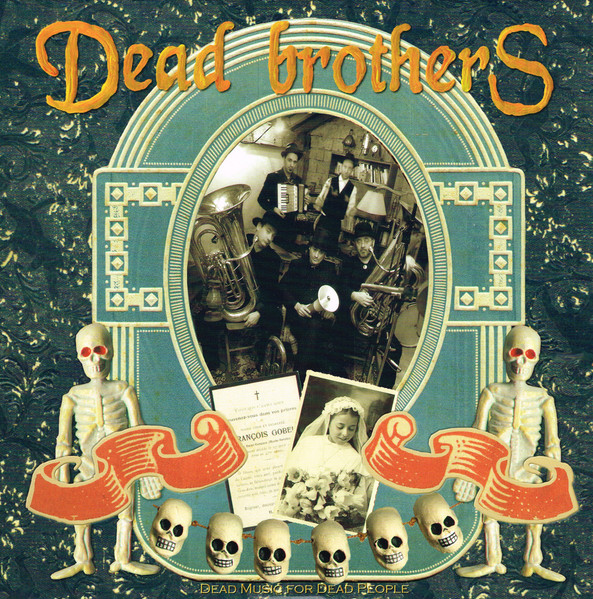

Album: Genre Recommendation, 8/10 | Genre: Dark Cabaret, Folk Rock | Undertones: Gothic Country, Blues, Brass Band, Psychobilly | Label: Voodoo Rhythm
We like it down the drain
Voodoo Rhythm Records is the coolest Swiss label, and for practically their entire run, the Dead Brothers were its coolest band. Their debut’s title betrays their allegiance to psychobilly, but the style is mixed with rootsier traditions and numerous left-field ideas – with the double threat of vocalist Alain Croubalian and multi-instrumentalist Pierre Omer, there is more than a kettle full of styles here that can’t really be agreed on. Let it be said that even their accordeon musette pieces are gothic to the bone, their alt-country is punk and their ramshackle, unsure take on folk and blues forms is the sound of a funeral brass band trying to find its way through a binge. With a rugged sound largely based on accordeon, tuba and banjo, commanded by Dead Alain’s thin but unrelenting voice filtered through a megaphone, dark cabaret might start to describe the attitude, but not the sound. More disjointed and mosaic than the even greater things that were to follow, this is a truly weird debut album by a legendary band.
Day of the Dead (2002)


Album: Genre Recommendation, 8/10 | Genre: Dark Cabaret, Folk Rock | Undertones: Gothic Country, Blues, Brass Band, Psychobilly | Label: Voodoo Rhythm
We can talk about the little things you hide inside
Doubling down on the most off-kilter aspects of your debut is risky business, especially if you end up putting little, preciously beautiful Montmartre-morning-pieces like “Walzer” and “Goldbrunbrunnenplatz” next to distorted goth freak-outs like the Cramps’ “Human Fly” or the danse macabre of “Tod von Basel”. But the Dead Brothers’ second album is arguably even better than their first. Gothic country sits next to the quasi-chanson “La Paloma” imagined as played in an expressionist cabaret of the 1920s, complementing the brass band / swing mash-up of a frantic “St James Infirmary Blues”. Amplified post-punk is juxtaposed to the wonderfully pensive funeral pavillon-orchestra of “How Deep Is the Water” or “Entre chien et loup” (the French expression for the twilight hour, when things become indiscriminate and lose their shape). With a little less tuba as the songs’ driving force, but more horns and banjo and more folk roots (the credits of the sardonic, sparse Appalachian blues „Things you Hide“ say it ‚was sung to us by Townes Van Zandt‘ – which isn’t true, but who knows), the band manages to go further down their debut’s untrodden path: What if music history had played out differently? What if punks had chosen New Orleans brass band as their founding sound? What if post-punk’s eminent figure had been Django Reinhardt? It’s one of maybe five albums I bought exclusively based on the cover art, and it surpassed my wildest dreams.
Flammend‘ Herz (2004)

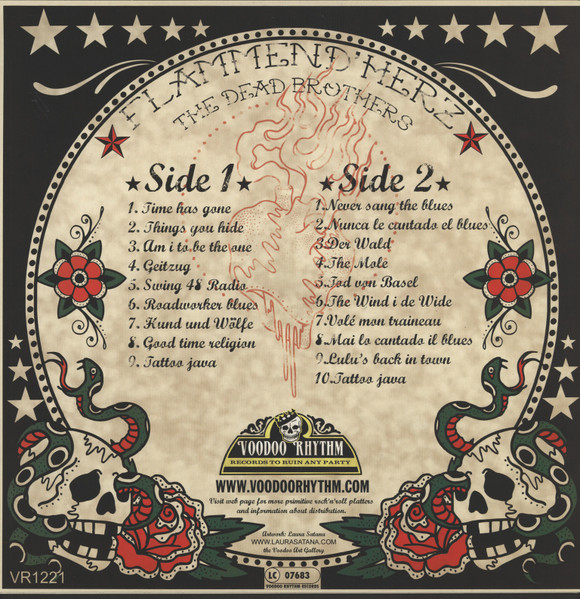
Album: Fan Recommendation, 7/10 | Genre: Dark Cabaret, Contemporary Folk | Undertones: Gothic Country, Acoustic Blues, Jazz manouche | Label: Voodoo Rhythm
Foggy autumns and snowy old towns
Functionally the score of a documentary about geriatric tattoo-lovers, but the Dead Brothers’ third album does offer much more. For one, it’s their first album with alt-country singer-songwriter Delaney Davidson, whose sensibility for quietly disturbing, whispered melodies does fit the Dead Brothers’ approach to a tee – his signature song “Time Has Gone” kicks off affairs here, but as the album is purely instrumental, the song’s time to shine will come another day. Most of these dark folk miniatures do occur and re-occur on the band’s proper studio albums in their full form. A template of sorts is Tom Waits’ The Black Rider, both due to its complementary nature as the soundtrack of a stage production, but especially because of its sound, it’s the same Waits-ian vein of dark cabaret and somber acoustic folk. Many of these vignettes really make you feel like your lost in some fairy tale forest – a hushed accordeon here, a tingling guitar line there, pensive piano and percussion mostly executed on rusty cans and dissonant woodshed tools. Wonderful stuff, atmospheric to the bone – I didn’t really see it as a proper album for a long time, but it’s just such a good soundtrack to foggy autumns and walks in snowy old towns, I’ve listened to it dozens of times now. The fact that you can get fleshed-out versions of the songs here on their other albums actually is a mutual benefit.
Wunderkammer (2006)
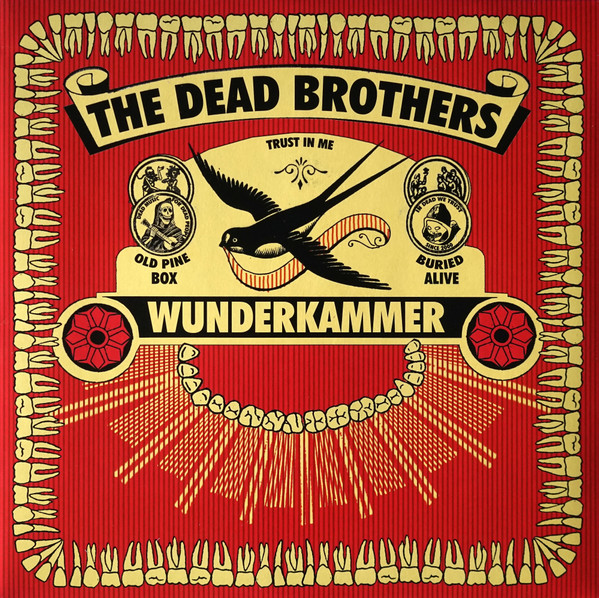
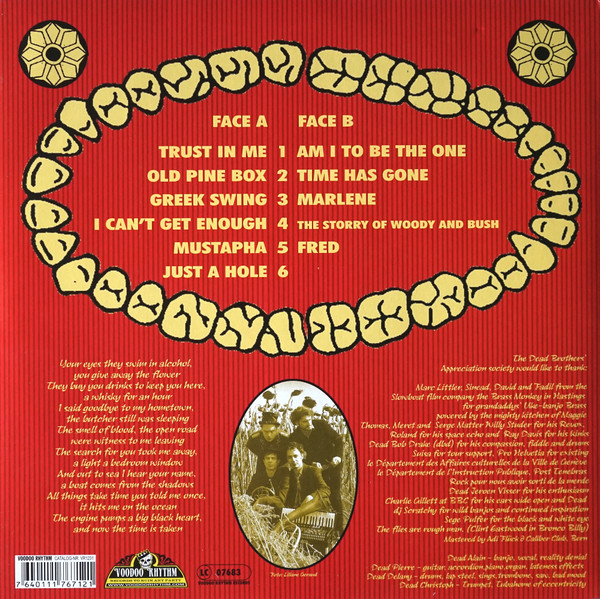
Album: Genre Classic, 10/10 | Genre: Dark Cabaret, Folk Rock | Undertones: Gothic Country, Blues, Jazz manouche, Psychobilly | Label: Voodoo Rhythm
They buy you drinks to keep you here
A balkan brass band playing swampy blues, Hank Williams dragged into a cabaret piece to jam with Django Reinhardt in Tunisia, New Zealand’s best down-trodden singer-songwriter Delaney Davidson sneaking his way through from a dirty sea shanty- and psychobilly-show back to the local cinema’s screening of the Godfather (the Jungle Book plays next door). This album has it all, molded into one sound pairing banjos with brass band, country shuffles with wooden flutes, rip-roaring punk-blues (“Old Pine Box”) with soaring steel guitars (“Fred”).
The Dead Brothers were the best Swiss band during a long time of their stretch – this album stands out of their excellent catalogue as it has three core members – Dead Alain, Dead Pierre and Dead Delaney – fusing their completely different musical backgrounds in a just astounding fashion, elevating each other. The fusion would, of course, combust after this peak – leading to a series of excellent albums under the guide of Dead Alain. But this is really their White Album, where styles from the Maghreb to the Texan backlands find their common ground in funeral marches, swamp blues and Nick Drake-ian singer-songwriting. Fantastic, wonderful, odd record, and without hyperbole: There’s nothing quite like it in the world.
 Text Lambrecht